Imagine stepping into your bustling Mosman Park café on a Friday night. The silverware is clinking and delicious aromas are in the air – but the real hero is invisible: a kitchen and dining area kept sparkling clean behind the scenes. You and I both know that running a restaurant isn’t just about the food. It’s about health codes, happy customers, and that peace of mind that comes from knowing every corner gleams. In this post, we’re diving into Commercial Restaurant Cleaning: what it means, why it matters in Mosman Park, and how to keep your business compliant and your guests coming back for more. By the end, you’ll wonder how you ever did it without a little professional help.
Why Cleanliness Matters in Your Restaurant
You may chuckle, but the way your restaurant looks has a direct line to your bottom line. A clean restaurant inspires trust – customers pay attention to tidiness, even subconsciously. In today’s hospitality world, Commercial Restaurant Cleaning is no longer optional — it’s expected.
Post-pandemic diners are sharper than ever. They notice fingerprints on glass, crumbs under tables, and greasy exhaust fans. If your front-of-house and back-of-house aren’t gleaming, you could lose customers – fast.
More importantly, keeping everything clean isn’t optional; it’s legally mandated. Australian food safety laws require that all premises, equipment and food-contact surfaces be kept clean and sanitary. That’s where structured Commercial Restaurant Cleaning plays a massive role.
Here’s why it matters:
- Customer confidence: A spotless dining area tells guests you care.
- Health compliance: Proper Commercial Restaurant Cleaning helps you pass inspections.
- Better reviews: Clean toilets = better Google ratings (true story).
- Staff morale: Nobody cooks well in chaos.
In short, Commercial Restaurant Cleaning isn’t busywork — it’s brand protection.
Regulations and Standards: What You Need to Know
Let’s talk about the rules (don’t worry — I’ll keep it simple).
Restaurants in Mosman Park must comply with Australia New Zealand Food Standards Code (Standard 3.2.2) and WA Health regulations. These laws clearly state that kitchens, equipment, and surfaces must remain clean and sanitary at all times.
That means:
- No grease buildup
- No dirty prep benches
- No forgotten corners behind appliances
Professional Commercial Restaurant Cleaning helps ensure these standards are met consistently.
Many venues now maintain cleaning logs, schedules, and compliance checklists. Health inspectors love documentation. Trust me — having proof of regular Commercial Restaurant Cleaning can save you during audits.
Key Areas and Cleaning Schedule
What should a Commercial Restaurant Cleaning plan include? The magic is in the details, and those can add up fast in a busy kitchen. A smart approach is to break tasks into daily, weekly, and monthly chores. Here’s a quick breakdown:
| Area / Task | Daily | Weekly | Monthly |
| Prep surfaces & counters | Sanitize with approved spray after each shift | Deep scrub all food-contact surfaces | Strip and re-wax counters if needed |
| Cooking equipment | Wipe grills and stoves after use; clean spills immediately | Degrease ovens, fryers; clean hoods | Service hood filters; inspect seals, gaskets |
| Floors & walkways | Sweep and mop all areas to remove debris and spills | Deep scrub kitchen floor; strip/wax front-of-house | Steam-clean or polish floors thoroughly |
| Dishwashing area | Sanitize sinks and spray-wash utensils; empty and refill sanitizer buckets | Clean and descale dish racks and sinks | Check and maintain dishwasher (clean filters) |
| Waste bins & disposal | Empty food waste bins at closing | Wash out bins with disinfectant | Clean grease traps and garbage chutes |
| Refrigeration | Check for spills, expired items; wipe shelves | Defrost and deep-clean walk-in fridge | Clean coils and condenser; inspect seals |
| Dining area & restrooms | Wipe and sanitize tables, chairs after each use | Vacuum or deep-clean upholstery and carpets; polish glass | Replace air fresheners; deep-clean grout and fixtures |
| Hardware & touchpoints | Sanitize door handles, menus, POS terminals frequently | Disinfect light switches, taps, faucets | Service automatic dispensers; inspect for wear |
Each bullet “Daily duties” in the Rubbermaid guide highlights why: for instance, it stresses wiping all surfaces with a microfibre cloth and food-safe spray and emptying bins at the end of day. Notice how even trivial-looking tasks (like cleaning under appliances or sanitizing faucets) make the list –skipping them could let bacteria linger.
The takeaway? A checklist keeps you on track and audit-ready. Many busy eateries hang laminated cleaning charts in the kitchen (as Rubbermaid recommends) so nobody forgets a task. You can create your own table (like above) or ask a pro to provide one.
DIY vs Professional Cleaning Services
Here’s the honest truth.
You can do basic cleaning in-house. But serious Commercial Restaurant Cleaning? That needs professionals.
That’s where Mopped360 steps in.
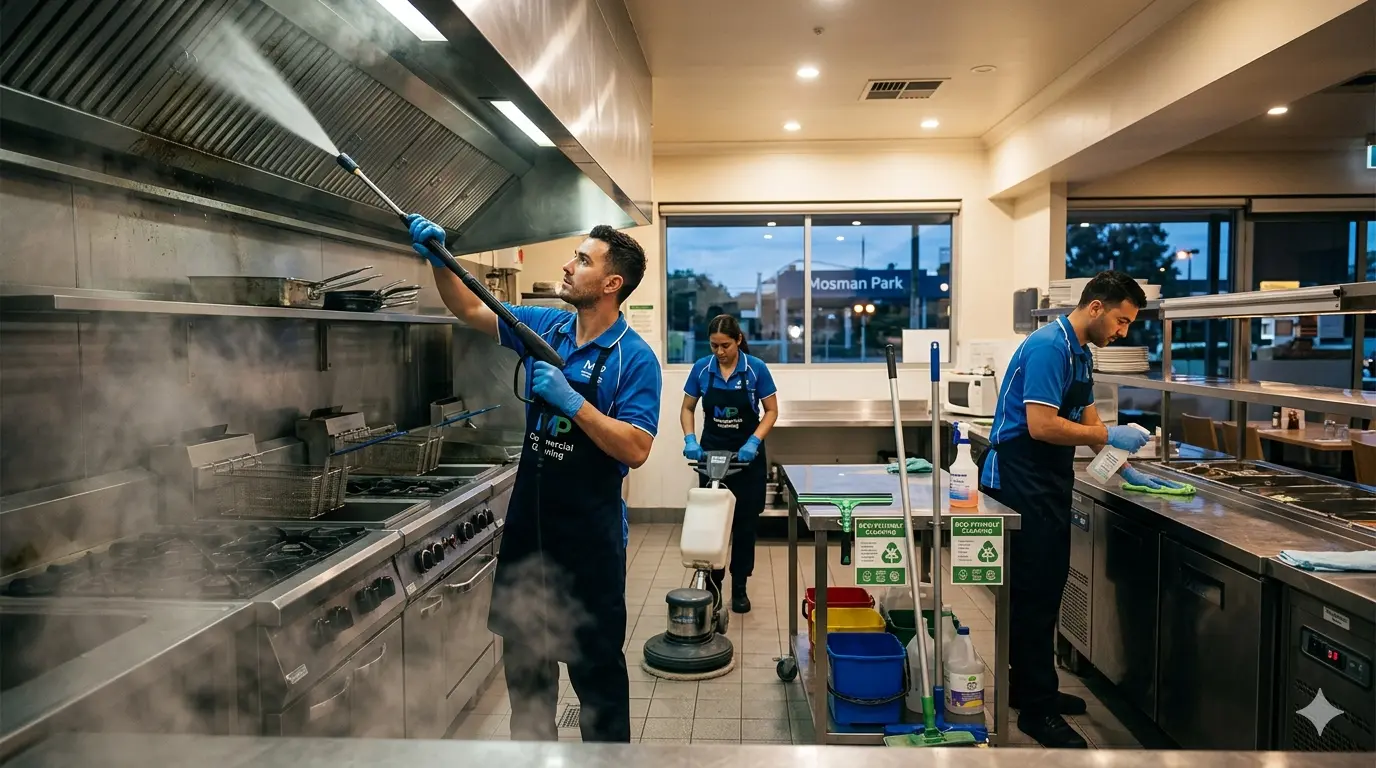
They’re a Perth-based, family-run business specialising in Commercial Restaurant Cleaning for hospitality venues. Fully insured. Police-checked staff. Eco-friendly products. Transparent pricing.
What does that mean for you?
- Deep oven cleaning
- Floor drain sanitation
- Hood degreasing
- Full kitchen resets
All while you sleep.
If you’re juggling staff rosters, suppliers, and bookings, outsourcing Commercial Restaurant Cleaning gives you back precious hours — and peace of mind.
Green Cleaning and Safety Considerations
Modern Commercial Restaurant Cleaning isn’t just about bleach and elbow grease.
Customers care about sustainability. Staff care about air quality. You should care about both.
Mopped360 uses eco-friendly products that kill bacteria without harsh fumes. It keeps your workplace safer and your brand more aligned with Mosman Park’s eco-conscious vibe.
Staff should also understand the basics:
- Sanitising vs cleaning
- Chemical safety
- Cross-contamination prevention
According to Australia’s food safety guidance from surfaces must be properly sanitised using approved methods — not just wiped down. That’s why structured Commercial Restaurant Cleaning matters.
Choosing the Right Cleaning Partner
Not all cleaners understand restaurants.
You want specialists in Commercial Restaurant Cleaning, not general house cleaners.
Ask:
- Do you clean commercial kitchens?
- Do you follow WA Health standards?
- Do you provide cleaning reports?
Mopped360 ticks all these boxes — and local businesses rave about their reliability.
Conclusion
Commercial restaurant cleaning in Mosman Park isn’t just a checklist item – it’s part of the recipe for success. A pristine environment protects your customers and your brand, while meeting the strict food safety standards of WA law. Whether you roll up your sleeves or hire pros like Mopped360, the goal is the same: a spotless, welcoming eatery that keeps people coming back. By following these guidelines – from daily wipes to scheduled deep cleans – you’ll keep your diners happy, your inspectors smiling, and your business thriving.
Ready to book a professional clean or need a custom hygiene plan? Reach out to your local cleaning experts and see how a sparkling kitchen can spice up your service.
FAQs about Commercial Restaurant Cleaning
How often should I deep-clean my restaurant kitchen?
Many health departments recommend weekly or bi-weekly deep-cleans for high-use areas. For example, ovens and hoods often need weekly degreasing, while exhaust vents and grease traps might be done monthly. It depends on your foot traffic and type of cooking. (Ask a pro for a tailored schedule.)
What’s included in a “commercial restaurant cleaning” service?
Usually it covers front-of-house (wiping tables, vacuuming, cleaning restrooms) and back-of-house (cleaning floors, degreasing equipment, sanitizing prep surfaces). Check with the service: Mopped360’s restaurant cleaning includes kitchen-to-floor sanitation that “meets health standards”, so you know it’s thorough.
Do I need special cleaning products?
Yes. Use food-safe sanitisers for surfaces and equipment. Many restaurants use medical-grade sanitiser or diluted bleach solutions (as FSANZ suggests) to kill microbes. Avoid scented or oily cleaners on food areas. Eco-friendly labels can be nice, but always follow manufacturer instructions for contact time and dilution.
Can I just train my own staff to do all the cleaning?
You can certainly have staff do daily clean-ups (wiping stations, washing dishes, mopping spills). But consider periodic professional cleans too. Staff might miss a hard-to-reach spot or be too rushed. A dedicated cleaning crew brings specialized tools and routines that keep you audit-ready.
How much does professional restaurant cleaning cost in Perth?
It varies by restaurant size and tasks, but think in the range of a few hundred dollars for an hour’s deep clean of a standard kitchen. Some companies (like Mopped360) offer bundled rates or regular plans. Given the cost of potential fines, many owners find it worth the investment for the reassurance it brings.