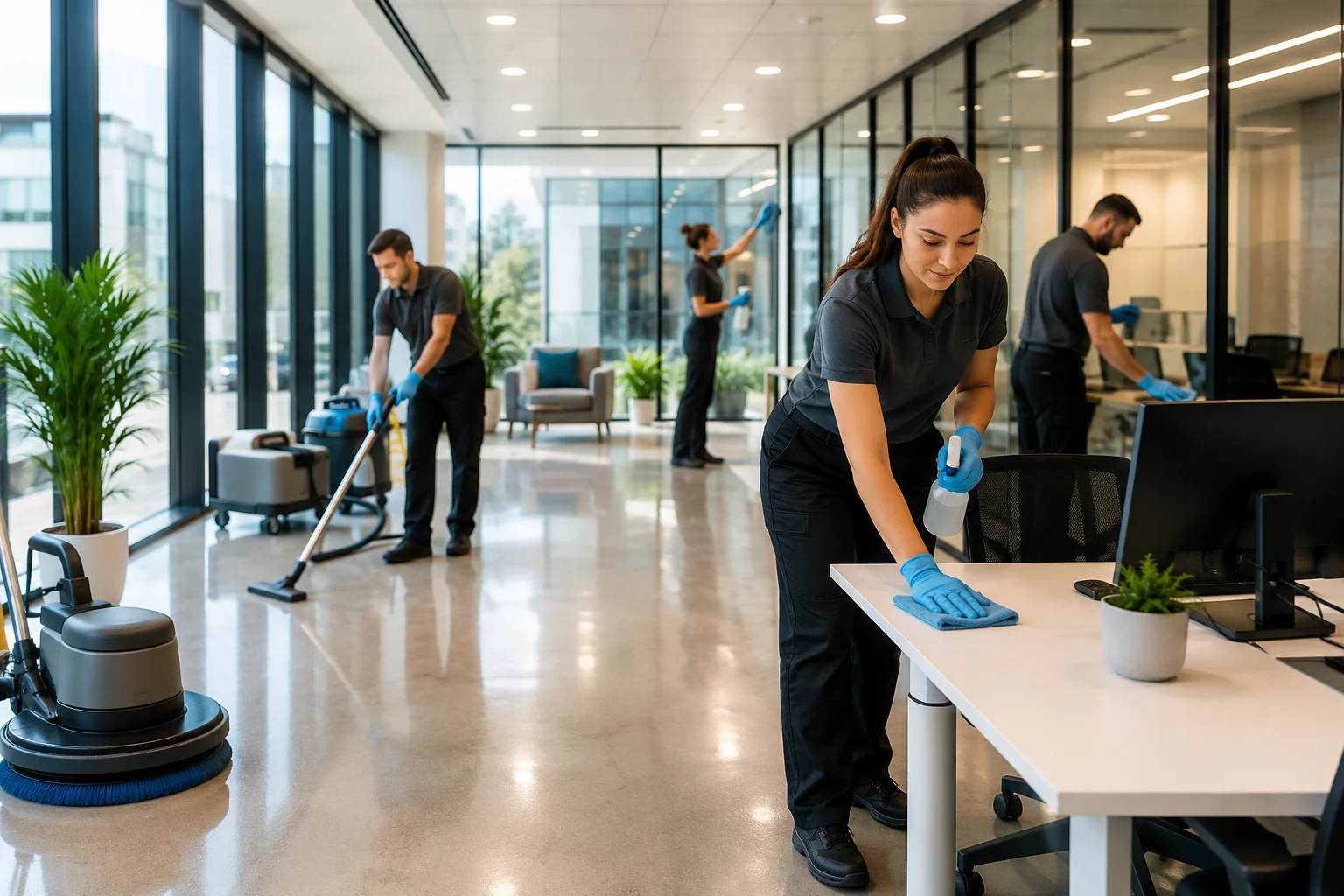
Imagine strolling into a Perth office on a Monday morning to find every desk dust-free, the floors shining, and not a coffee stain in sight. You might think, “Wow, this place is spotless!” In reality, something like a Cleaning Service Level Agreement (SLA) is behind the scenes, making sure your workplace stays fresh.
An SLA is basically a fancy term for the nitty-gritty details of what “clean” means and how to keep everyone accountable.
Think of it as a cleaning checklist written in contract form – it spells out exactly what a cleaner will do, how well they must do it, and what happens if things fall short. This is a step up from a simple handshake or verbal promise. By the end of this article, you’ll see why a solid cleaning SLA is your best mate for a consistently tidy office.
Defining a Cleaning Service Level Agreement
A cleaning Service Level Agreement is part of your cleaning contract that sets out quality standards and fixes everyone’s expectations. A normal cleaning contract might list things like “mop floors weekly” or “change bins” – that’s the scope of work.
But an SLA digs deeper. It says how those tasks must be done (for example, “floors mopped until they gleam with no visible dirt”), when exactly (e.g., “within 2 hours of closing time”), and what happens if it’s not done right. In other words, it’s the difference between saying “Keep the office clean” and saying “Keep the office clean to an 85% cleanliness score on our checklist.”
- Scope of Services: A clear list of tasks (daily vacuuming, fortnightly carpet shampoo, monthly window wash, etc.) with frequency.
- Performance Standards: Concrete targets – for instance, “All touchpoints (door handles, light switches) wiped down daily to a zero-dirt standard.”
- Staff & Equipment: Who does the job (experience/training) and who brings what (cleaning agents, vacuums, consumables).
- Reporting & Reviews: How results are checked – maybe weekly inspections or monthly reports – and who signs off.
Each item in the SLA ties cleaning chores to measurable outcomes. It shifts cleaning from “fingers crossed” to “no, we measure it and can see it.” That way, a Perth facility manager and a cleaning crew both know the game rules.
Key Components of a Cleaning SLA
When it comes to SLAs, details matter. It’s not enough to say “clean the kitchen” – you specify how sparkling and how often. A good cleaning SLA for a Perth business might include:
- Task Definitions & Frequencies: Break tasks into daily, weekly and periodic jobs. Daily might cover bins, bathrooms, high-touch surfaces; weekly might cover furniture dusting; periodic could include carpet deep cleans or pressure washing.
- Quality Benchmarks: Instead of vague terms, use outcome-based standards. For example, “Restrooms must meet the ‘no visible soil’ standard every day, with soap dispensers 100% stocked.” These concrete benchmarks turn a cleaning checklist into a performance guarantee.
- Response & Correction Timeframes: What happens if something’s missed? An SLA will set response times – e.g., if someone complains about a missed clean, the provider must fix it within 24 hours or face a penalty. This is like having a built-in rewashes policy.
- Personnel Requirements: Specify who handles your site. This might include minimum training, uniform requirements, background checks, or even language skills. You don’t want an untrained subbie turning up and guessing the scope.
- Inspection & Auditing: Determine how you’ll check the cleaning. Will there be unannounced spot inspections? Third-party audits? Digital checklists? Knowing how performance is measured keeps everyone honest.
| Aspect | Cleaning Contract | Service Level Agreement (SLA) |
|---|---|---|
| Focus | Defines who does what and for how long. | Defines how well tasks are done and how fast issues are fixed. |
| Performance Terms | Often broad (e.g., “clean daily”). | Specific standards (e.g., “daily to 85% cleanliness”). |
| Accountability | Limited: disputes get argued after the fact. | High: penalties or credits if benchmarks aren’t met. |
| Examples | Lists tasks and payment terms. | Includes response times, inspection scores, and rebates. |
By combining a regular cleaning agreement with these SLA elements, you turn the arrangement into a partnership with clear accountability. You might have heard of commercial cleaning services in Perth that boast ISO or WHS accreditations – that’s all about meeting standards. An SLA ensures those lofty promises are written down and enforced day-to-day.
Why SLAs Matter for Perth Businesses
Think of a cleaning SLA like a pact between you and the cleaner to avoid “But I thought that was your job?” moments. Without an SLA, imagine having to haggle over spilled coffee on Monday, only to be told, “It’s not in the list, so we didn’t do it.”
Frustrating, right? In contrast, an SLA forces clarity. It protects both you and the provider by locking in what clean really means. Here’s why your Perth workplace will thank you for having one:
- Consistency & Predictability: An SLA means every week looks as clean as the last. High-season dust storms in WA or the pollen in spring won’t catch you off guard because cleaning priorities are set (and measured) across seasons.
- Accountability: When standards are laid out, no one can shrug away a missed job. If a cleaner snoozes on duty, the SLA’s penalty clause or service credit system makes them answerable – sometimes even financially. This keeps even night-shift crews on their toes.
- Risk Management: Cleaning isn’t just about aesthetics; it’s about health and safety too. A solid SLA ties into regulations like WorkSafe WA’s guidelines – for example, a duty to control hazardous substances. Ensuring compliance (like proper handling of cleaning chemicals or sharps) can be written right into the SLA. In fact, WorkSafe WA provides a cleaning-industry checklist to highlight common hazards and solutions. Using a cleaning SLA helps you show due diligence under Western Australia’s safety laws.
- Value for Money: Pay for performance, not just time spent. With SLAs, you avoid argument over “Did they really do that?” You either see the results or you get compensated. Over time, this means better service for the same budget or lower costs if the provider falls short.
Overall, an SLA bridges the gap between expectation and reality. It’s a bit like installing speed cameras in a school zone: people drive safer because they know exactly where the limits are and the consequences of breaking them. In cleaning terms, everyone turns up knowing the bar is high – not just at the handshake, but every single day.
Crafting an Effective Cleaning SLA
Alright, you’re convinced SLAs are helpful. But how to draft one? Drawing up a cleaning SLA is a bit like making a recipe: you need the right ingredients in the right amounts. Here are some tips to cook up a robust SLA:
- Define Clear Deliverables: List every cleaning task explicitly – no vague “clean windows as needed.” Spell out areas (offices, lobbies, kitchens), frequencies (daily, weekly, monthly) and standards (“streak-free glass,” “trash emptied 5pm sharp”).
- Set Measurable KPIs: You might use percentage targets or scoring systems. For example, demand at least 90% score on a standard checklist. Tie these KPIs to rewards or penalties. Some SLAs offer service credits for missed KPIs – like a discount on next month’s invoice.
- Agree on Inspection Protocols: Schedule joint walkthroughs or site audits. Use a checklist or digital app. The SLA should say who checks (the property manager? the cleaner’s supervisor?) and what happens if inspections fail.
- Include Response Times & Escalation: Define how quickly urgent issues get fixed (e.g., 2 hours for floods or spills). Outline escalation steps for recurring issues – maybe a review meeting or an independent mediator if needed.
- Plan for Changes: Businesses evolve and so do spaces. Write in a process for changes – adding a new office wing or event, or seasonal shifts. That way, you don’t need a whole new contract for every tweak.
- Review Regularly: An SLA isn’t “set and forget.” Commit to reviewing performance together – maybe quarterly. Use those reviews to celebrate wins and adjust any out-of-date terms.
When it’s time to pen the SLA, use plain language (no legalese labyrinths). A good trick is to walk through a normal week in your business and ask, “What cleaning do I need each day, and how clean exactly?” Then document that.
By the time you’ve run through a calendar in your head, you’ll have the skeleton of an SLA. And if you ever feel stuck, don’t hesitate to consult the experts – after all, a few hours drafting an SLA is a small investment for months (or years) of smooth cleaning relations.
Bringing It All Together
A cleaning Service Level Agreement is more than paperwork – it’s peace of mind. It keeps you from micromanaging cleaning crews day in, day out, because the SLA already did that work.
You’ll know the office is cleaned to your specifications, the budget is honoured, and any hiccups are handled by the book. For example, I once worked with a client who only thought “clean” meant “no visible dirt”.
A single unsatisfactory walkthrough (which they’d never specified) led to a whole-week negotiation. After hammering out an SLA with clear checklists, those debates vanished – everyone knew exactly what counted as “clean,” and on which days to expect what service.
At the end of the day, a cleaning SLA is like a friendly but firm coach: it reminds everyone of the game plan. It’s the secret sauce that keeps Perth offices hygienic without drama.
Ready to make it official? Talk to a professional cleaner or facilities manager, and start drafting your SLA today. Your future well-rested, dust-free self will thank you for it.
Don’t let cleaning slip through the cracks. Reach out to a trusted cleaning provider or check out our Commercial Cleaning Experts to craft an SLA that keeps your space sparkling.
Frequently Asked Questions
What exactly is a Cleaning Service Level Agreement (SLA)?
A cleaning SLA is a written agreement that spells out the exact standards, tasks, and timelines for your cleaning service. It goes beyond a normal contract by detailing how tasks are done (not just what tasks are done). In short, it’s a performance promise between you and the cleaning provider.
How is an SLA different from a regular cleaning contract?
A standard cleaning contract lists the scope of work, pricing, and duration (like hiring someone to clean your office once a week). An SLA, on the other hand, adds layers of accountability. It specifies quality benchmarks (e.g., “floors to 85% cleanliness”), response times for issues, and penalties if standards slip. Think of the contract as the “job description” and the SLA as the “quality guarantee.”
Why should my Perth business have a cleaning SLA?
Perth’s unique climate (with dust and sunny days) and busy business pace mean cleaning needs are specific. An SLA ensures your office stays consistently clean no matter what’s thrown at it. It also ties into safety and health rules here in WA – for example, requiring proper chemical handling and incident reporting as per local regulations. Ultimately, it saves you time, money, and headaches by preventing misunderstandings and ensuring you pay for the cleanliness you actually get.
What happens if the cleaning provider doesn’t meet the SLA standards?
If the agreed standards aren’t met, the SLA typically triggers a plan B. That might include the cleaner redoing the job at no extra charge, providing a service credit, or even financial penalties. Some SLAs say “missed task = 10% off next invoice,” for example. It all depends on how you set it up. The key is: without an SLA, a missed clean often just leads to grumbles. With an SLA, you have a formal fix-it or compensate clause.