You know that moment when you finally move a pot, outdoor chair or bath mat and discover the tile underneath looks about three shades cleaner? That little patch tells you plenty. Your tiles have probably collected years of dust, grime, oils, soap residue and everyday foot traffic without asking for permission.
I see this all the time in Perth homes. The tiles themselves often look tired, but the real culprit usually hides around the grout lines, edges and textured areas. Regular mopping keeps a floor looking presentable, yet it rarely tackles every layer of stubborn build-up. That’s where professional Tile Cleaning can make a serious difference.
When I need to bring neglected floors back to life, I prefer a proper deep clean rather than another round of quick mopping. Working with Perth’s tile cleaning experts can help you identify what sits on the surface, what has soaked into grout and what needs more than a standard household cleaner.
What Actually Builds Up on Tiles Over the Years?
Let’s start with the obvious question: what exactly creates that grimy, dull appearance?
I usually find a mix of several things rather than one giant villain. Household dust settles on the floor, shoes drag in fine dirt, cooking leaves oily residue and bathrooms collect soap scum and moisture. Over time, all those small deposits create one big headache.
Grout can make the situation look even worse. Its textured surface can trap dirt far more easily than a smooth tile. In bathrooms, humidity can also encourage mould growth, particularly around damp corners and shower areas.
Perth’s climate brings another challenge. Dry weather can send fine dust through open doors and windows, while rainy periods can add wet soil and grime into busy entry areas. Your floor basically becomes a scrapbook of everything happening outside.
Common built-up grime on tiled floors
| Build-up | Where I commonly find it | What it can look like |
|---|---|---|
| Dirt and dust | Entryways and living areas | Grey, dull film |
| Grease and oils | Kitchens | Sticky or dark patches |
| Soap scum | Bathrooms | White or cloudy residue |
| Mould | Damp grout and corners | Black, green or dark spotting |
| Mineral deposits | Wet areas | Chalky or crusty marks |
| Embedded grime | Older grout | Deep grey or brown discolouration |
The important bit? Not every stain represents removable dirt. Some marks point to worn grout, permanent discolouration, etching or surface damage. I always separate those problems before deciding what a cleaning process can realistically achieve.
Can Tile Cleaning Really Remove Years of Dirt?
Yes, in many cases, it can remove a surprising amount.
When I tackle heavily soiled tiles, I don’t think of the job as simply “washing the floor”. I think in layers. First, I remove loose debris. Then I work on the stubborn residue that ordinary mopping leaves behind. Finally, I focus on grout and detailed areas where grime loves to hide.
For hard ceramic and porcelain surfaces, deep cleaning can remove dirt, grease, soap residue, some mineral deposits and other surface contaminants. The final result depends heavily on the tile type, grout condition, previous cleaning products and age of the floor.
Western Australian health guidance also recommends physical scrubbing when dealing with mould on hard surfaces and stresses the importance of drying the area and fixing the source of moisture. You can read the HealthyWA guidance on mould and dampness for practical advice.
That point matters because a cleaner floor won’t solve an ongoing moisture problem. If water keeps collecting in the same corner, I expect the same mould or staining to return.
What deep tile cleaning can often improve
- Heavy surface dirt
- Greasy kitchen residue
- Soap scum
- Mould staining on suitable hard surfaces
- Mineral and lime deposits on compatible tiles
- Dirty, dull grout
- General grime around tile edges
I avoid promising a miraculous “brand-new” finish every time. Old tiles can carry scratches, chips, faded grout and permanent staining. Good Tile Cleaning should improve the floor dramatically while keeping expectations realistic.
What Happens During Professional Tile Cleaning?
If you have never booked a deep clean, you might imagine someone arriving with a mop and disappearing into the sunset.
I approach it very differently.
1. I inspect the tile and grout
I first identify the surface. Ceramic, porcelain, natural stone and other materials can react differently to cleaning products and equipment. I also check the grout, stains, corners and previous coatings.
2. I remove loose dirt
Vacuuming or sweeping gets rid of sand, dust, hair and other loose material. Skipping this step can turn a simple clean into a muddy mess.
3. I choose the right cleaning approach
For heavily neglected floors, I may need stronger cleaning products, mechanical agitation or specialised equipment. I never treat every floor exactly the same because one-size-fits-all cleaning can create more problems than it solves.
4. I focus on the grout
This part often creates the biggest visual change. Grout can hold years of grime, so I give it plenty of attention rather than treating it as background scenery.
5. I rinse and remove the dirty solution
I want the loosened grime to leave the floor completely rather than simply moving into another corner. Proper extraction can make a huge difference here.
6. I inspect the result
Finally, I check the surface again. Some areas may need another pass, particularly around edges, corners or heavily marked grout.
Why Grout Often Looks Worse Than the Tiles
Here’s a little tile-cleaning reality check: sometimes your tiles aren’t the problem at all.
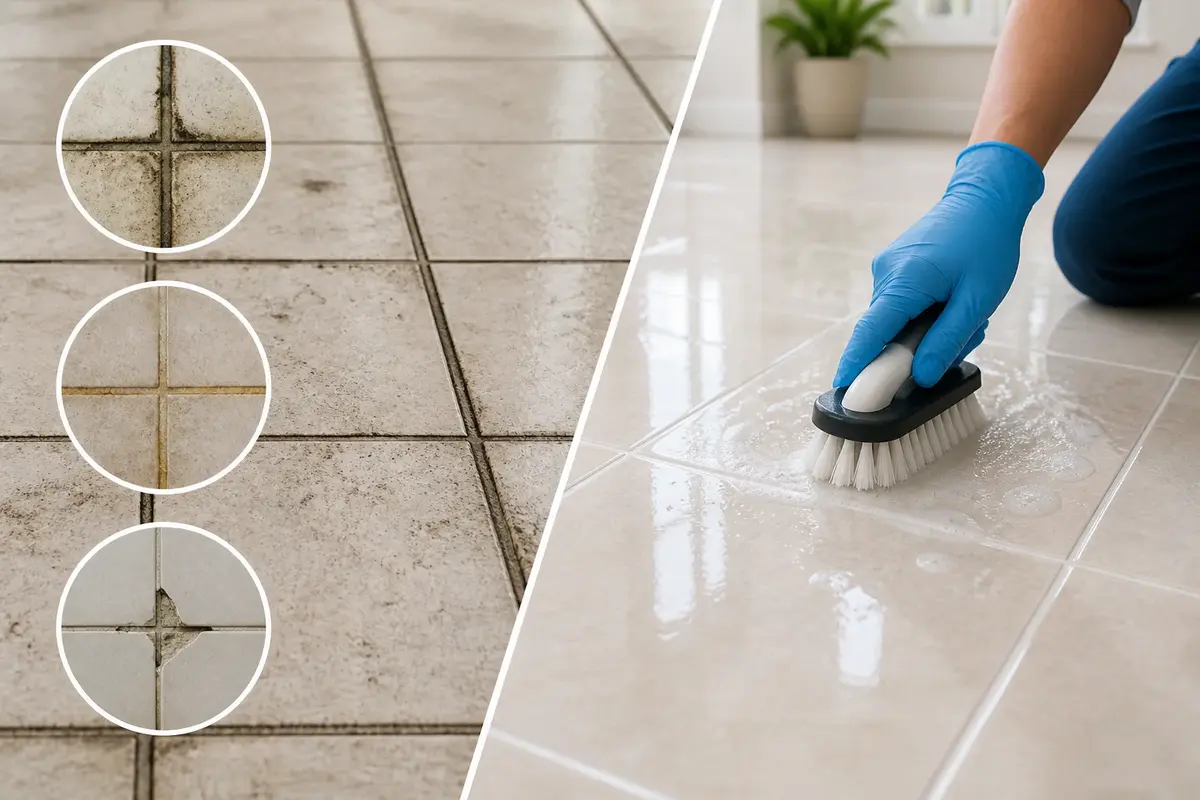
Your grout can completely change the appearance of the floor. Clean grout makes tiles look brighter and sharper, while dark, grimy grout can make an otherwise healthy floor look old.
Grout also has a different texture from the tile surface. Dirt can settle into tiny pores and grooves, which explains why your mop may glide beautifully across the tile while leaving the grout looking stubbornly miserable.
I often recommend paying close attention to these warning signs:
Dark grout: Heavy dirt, mould staining or long-term discolouration may have settled in.
Sticky grout: Kitchens can collect grease and cooking residue around floor areas surprisingly quickly.
Patchy grout: Uneven cleaning, old stains or previous DIY products can create inconsistent colour.
Powdery or damaged grout: Cleaning alone may not solve a deterioration problem.
When grout has suffered actual damage, I don’t pretend cleaning will repair it. In some cases, grout restoration or replacement makes more sense.
Will Tile Cleaning Remove Every Stain?
This is where I like to keep things honest.
Tile Cleaning can remove a lot, but it cannot erase every mark that has ever happened to a floor.
Some stains sit on top of the surface and respond beautifully to deep cleaning. Others have penetrated porous grout or stone. Some marks come from mineral deposits, rust or old chemical reactions. Natural stone can also suffer etching that no ordinary cleaning process can reverse.
That’s why I prefer an assessment before making big promises.
Here’s a simple way to think about the likely outcome:
| Floor condition | Likely cleaning result |
|---|---|
| Surface dirt and dust | Excellent |
| Grease and grime | Very good |
| Soap residue | Very good |
| Dirty grout | Often excellent |
| Light mould staining | Good, depending on conditions |
| Heavy mineral deposits | Variable |
| Permanent discolouration | Limited |
| Cracked or damaged grout | Cleaning won’t repair it |
| Etched natural stone | Cleaning won’t restore the original finish |
A good cleaner should tell you where cleaning ends and restoration begins. I consider that a sign of professionalism, not a lack of confidence.
DIY Tile Cleaning vs Professional Deep Cleaning
I’m all for doing regular maintenance yourself. A decent mop, suitable cleaner and a bit of consistency can keep everyday grime under control. The problem starts when years of build-up turn your floor into a cleaning endurance test.
DIY works well for:
- Regular dust and dirt
- Fresh spills
- Light soap residue
- Routine bathroom cleaning
- Basic grout maintenance
Professional cleaning makes more sense for:
- Years of neglected grime
- Very dirty grout
- Large tiled areas
- Heavy grease build-up
- Stubborn mineral deposits
- Floors that still look dirty after repeated DIY cleaning
- Pre-sale or move-out cleaning
I also avoid the temptation to attack every stain with the strongest product in the cupboard. Acidic cleaners can damage acid-sensitive materials such as some natural stones, while overly aggressive scrubbing can mark certain surfaces. In other words, more muscle doesn’t always mean a better result.
How Long Does a Tile Cleaning Job Take?
The honest answer depends on the floor.
A compact bathroom with moderate grime can require far less time than a large Perth home with years of neglected grout. The tile material, room layout, amount of staining and condition of the grout all affect the workload.
I usually look at three things when estimating the effort:
Area size: More square metres simply mean more floor to inspect, clean and rinse.
Soiling level: Light maintenance takes far less work than years of accumulated grease and grime.
Surface condition: Damaged grout, stubborn stains and delicate materials can require extra care.
After the cleaning, I also recommend giving the floor enough time to dry properly before judging the final appearance. Damp grout can look darker than it really is.
How Do You Keep Tiles Clean After a Deep Clean?
Here’s the part I wish more people talked about.
A deep clean gives your floor a fresh start. Your routine helps keep it that way.
I recommend sweeping or vacuuming regularly so grit doesn’t sit on the surface and get walked around. In kitchens, I deal with spills quickly because grease becomes much harder to remove once it sits there for days.
For bathrooms, I focus on ventilation and moisture control. I also avoid using harsh products randomly, especially when I don’t know how the tile or grout will react.
A simple maintenance routine can look like this:
- Sweep or vacuum regularly.
- Mop with a suitable cleaner rather than flooding the floor.
- Clean spills as soon as you spot them.
- Give bathrooms plenty of ventilation.
- Keep an eye on grout discolouration before it becomes severe.
- Arrange a deeper clean when routine mopping no longer brings the floor back.
That last point matters. Waiting until the floor looks like it belongs in an archaeological dig won’t make the job easier.
Conclusion: Give Years of Grime the Boot
So, can professional Tile Cleaning remove years of built-up dirt?
In many cases, absolutely.
I regularly see heavily neglected floors improve once the cleaner targets the whole problem rather than simply mopping the visible surface. Deep cleaning can lift dirt, grease, soap residue, mould staining and other build-up, while proper grout cleaning can completely change the look of an older floor.
At the same time, I always keep expectations realistic. Cleaning can remove grime. It can’t magically undo cracked grout, permanent discolouration, etching or damaged tiles.
Your floor doesn’t need to look exhausted just because it has had a busy few years. Book a professional tile and grout clean, get an honest assessment of the condition, and give your Perth floors the reset they deserve.
Frequently Asked Questions
1. Can tile cleaning remove years of dirt from grout?
Yes. Deep cleaning can remove a substantial amount of dirt, grease, soap residue and surface staining from grout. The result depends on the grout’s condition, age and the type of staining.
2. How often should I have my tiles professionally cleaned?
I usually recommend professional deep cleaning when routine maintenance no longer restores the floor properly. Homes with pets, children, busy kitchens or high-traffic areas may need deeper cleaning more often.
3. Can professional tile cleaning remove mould?
Professional cleaning can remove mould from suitable hard surfaces, but I also look for the moisture source. Without fixing excess moisture, mould can return.
4. Can tile cleaning restore old, damaged grout?
Cleaning can improve dirty grout, but it cannot repair cracked, missing or seriously deteriorated grout. Those areas may need grout repair or replacement rather than cleaning alone.